
The Future of Creative Leadership
I spend a lot of time thinking about where creative leadership is headed. Throughout my career, I've built brands, led teams, and helped organizations navigate transformation. One thing has remained constant: change. The most effective leaders recognize change early and position themselves at the forefront of it. Today, we're in the middle of a fundamental shift. Customer expectations are evolving, technology is accelerating, and AI is reshaping how brands create, connect, and deliver value. As a result, creative leadership is expanding beyond what it has traditionally been.
The role many of us grew up aspiring to—the traditional Creative Director—is evolving into something bigger. Not because creativity matters less, but because it matters more. Creativity now sits at the intersection of brand, experience, technology, data, and business strategy. The opportunity is no longer just to create campaigns; it's to shape experiences, influence business outcomes, and build meaningful connections between brands and the people they serve. This is where I'm focused today: building the capabilities, perspectives, and partnerships needed to lead at that intersection and help organizations create connected experiences that deliver lasting value.
From Campaigns to Experiences
For years, creative leadership centered on building sexy campaigns. We developed big ideas, launched them into the world, measured performance, and moved on to the next thing. That model worked when marketing was largely episodic.
Today, brands exist in a constant state of interaction. Customers don't experience a brand through a single campaign—they experience it through websites, apps, social channels, customer service interactions, AI-powered recommendations, loyalty programs, packaging, communities, and countless micro-moments in between. The job is no longer simply creating campaigns; it's designing adaptive, personalized customer experiences that evolve alongside people—anticipating their needs, solving real problems, and delivering meaningful value along the way.
That shift changes everything, and creative leaders must evolve their mindset accordingly.
Creativity Alone Is No Longer Enough
One of the beliefs I share often is that the smartest place to start is strategy. For me, that means developing a deep understanding of people, motivations, and context before designing a solution. The most effective ideas don't begin with execution—they begin with clarity about the problem that needs to be solved. When you reframe creative work as problem-solving rather than design and content creation, the focus moves from producing outputs to driving outcomes. That's where ideas gain the power to change perceptions, influence behavior, and create lasting impact.
The future creative leader still needs creative vision but they also need:
Data literacy
Customer empathy
Systems thinking
Experience design skills
Business acumen
Technology fluency
Cross-functional leadership ability
The creative leaders who thrive in the next decade won't be the ones who make the most beautifully executed work—they'll be the ones who can connect creativity to business outcomes and human needs simultaneously.
AI Doesn't Replace Creativity. It Expands It.
There's a lot of conversation—and understandably, some anxiety—about what AI means for the future of creative work. I tend to see it differently. Throughout my career, I've embraced new tools that help teams move faster, work smarter, and spend more time on the thinking that creates real value. AI is simply the next evolution of that progression. The goal isn't to compete with AI; it's to learn how to work alongside it.
The creative leaders who will thrive are the ones who can combine human insight, empathy, strategic thinking, and sound judgment with the capabilities AI brings to the table. That's where new opportunities for personalization, relevance, and innovation emerge. The future isn't Human vs. AI—it's Human + AI. Technology can help us scale creativity, but people will always provide the intuition, cultural understanding, and emotional intelligence that make creative work resonate.
The Rise of the Experience Architect
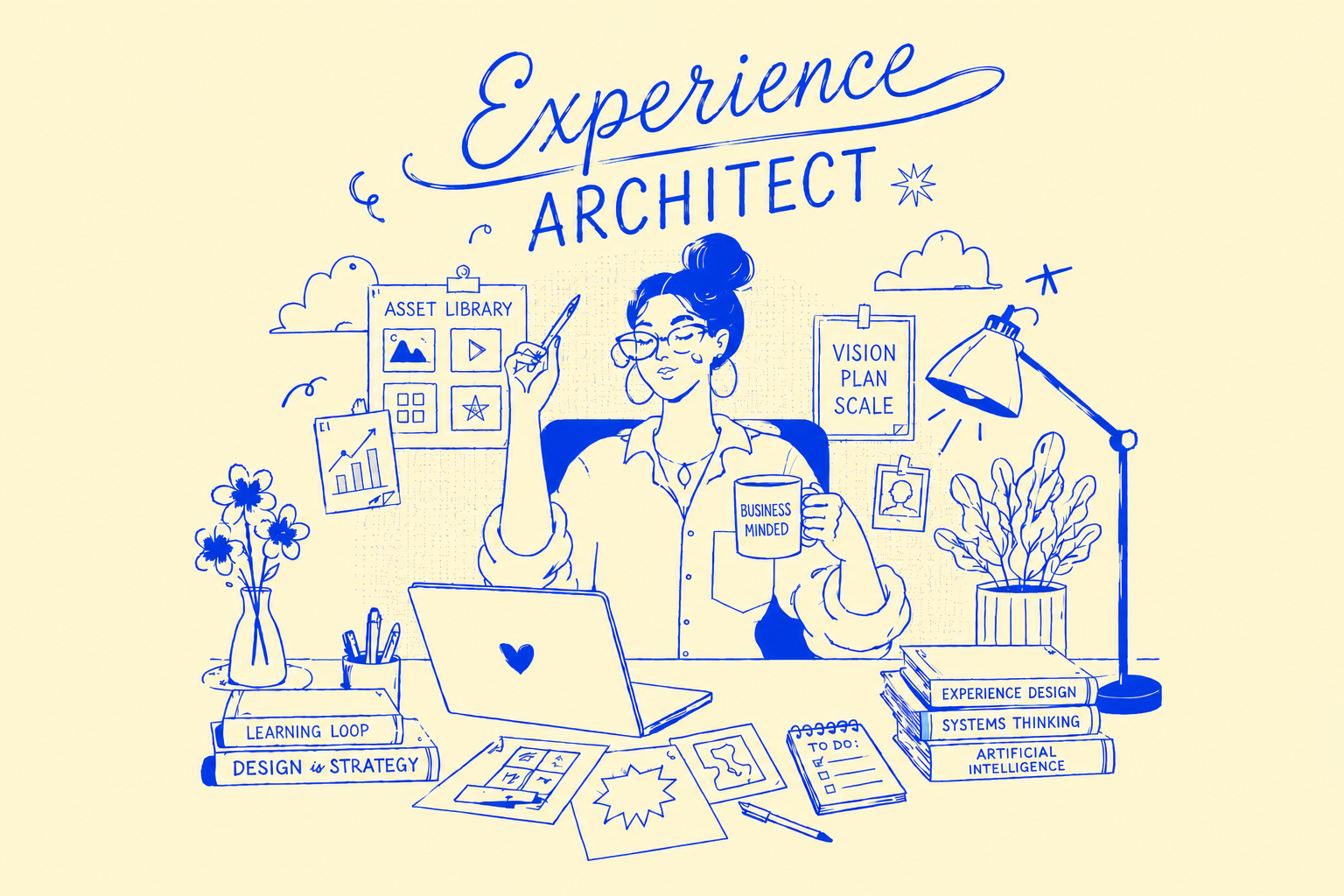
If I were describing the future version of today's Creative Director, I probably wouldn't define them as a campaign builder. I'd define them as an experience architect—someone who can design systems instead of one-off deliverables, create consistency across channels and touchpoints, build brands that adapt in real time, and lead cross-functional teams spanning marketing, product, technology, and customer experience. They're systems thinkers who can connect the dots across the organization, seeing how every interaction contributes to the larger customer experience. Most importantly, they're able to translate business strategy into experiences that create meaningful value for people.
That's one reason I've become increasingly interested in the intersection of brand strategy, customer journeys, content ecosystems, and organizational design. The future creative leader isn't sitting at the end of the process waiting for a brief to arrive. They're helping define the opportunity, shape the strategy, and architect experiences from the top down rather than the bottom up. Instead of reacting to business decisions, they're helping influence them from the beginning—ensuring that brand, customer needs, and business goals are aligned from the start.
Leadership Becomes the Differentiator
The further I've progressed in my career, the more I've realized that leadership is the multiplier. The work gets better when people feel empowered. Innovation accelerates when teams feel safe to experiment. Growth happens when leaders remove obstacles instead of creating them. I've always viewed leadership as service: the success of a business depends on its people, and the success of its people depends on the environment leaders create around them.
That's why I believe future creative leaders will spend less time directing every individual piece of work and more time building the systems, cultures, and capabilities that allow great work to happen consistently. The job becomes less about having all the answers and more about creating the conditions where great ideas, strong teams, and meaningful outcomes can emerge.
The Future Belongs to Curious Leaders
If there's one lesson I've learned over more than two decades of leading creative teams, it's this: curiosity compounds. The leaders who remain curious—about people, culture, technology, business, and the changing ways people interact with brands—are the ones who continue to grow. They adapt, evolve, and find new opportunities where others see disruption. Those who cling too tightly to yesterday's definition of creativity risk becoming disconnected from how businesses create value and how customers experience brands today.
The future of creative leadership isn't about producing more content—it's about creating more meaningful connections. Connections between brands and customers, data and empathy, technology and humanity. It's about bringing together seemingly disconnected ideas, perspectives, and capabilities to create experiences that matter. Ultimately, the opportunity is to connect business growth with human value. That's a future I'm excited to help build.
What I'm Focused On Next
The creative craft will always matter to me, but the further I progress in my career, the more I'm drawn to developing capabilities that sit at the intersection of creativity, strategy, technology, and business. Areas I’m leaning more heavily into include:
Brand strategy and positioning
Consumer insights and data literacy
Experience design
AI and emerging technology
Cross-functional influence
Business strategy
Mentorship and talent development
As creativity becomes more integrated across the business, the opportunity for creative leaders expands as well. The organizations that win in the future won't separate strategy, technology, customer experience, and growth from creative thinking. They'll bring them together—and the leaders who can connect those dots will help shape what comes next.
