
The 6 Systems Every Creative Team Needs to Scale
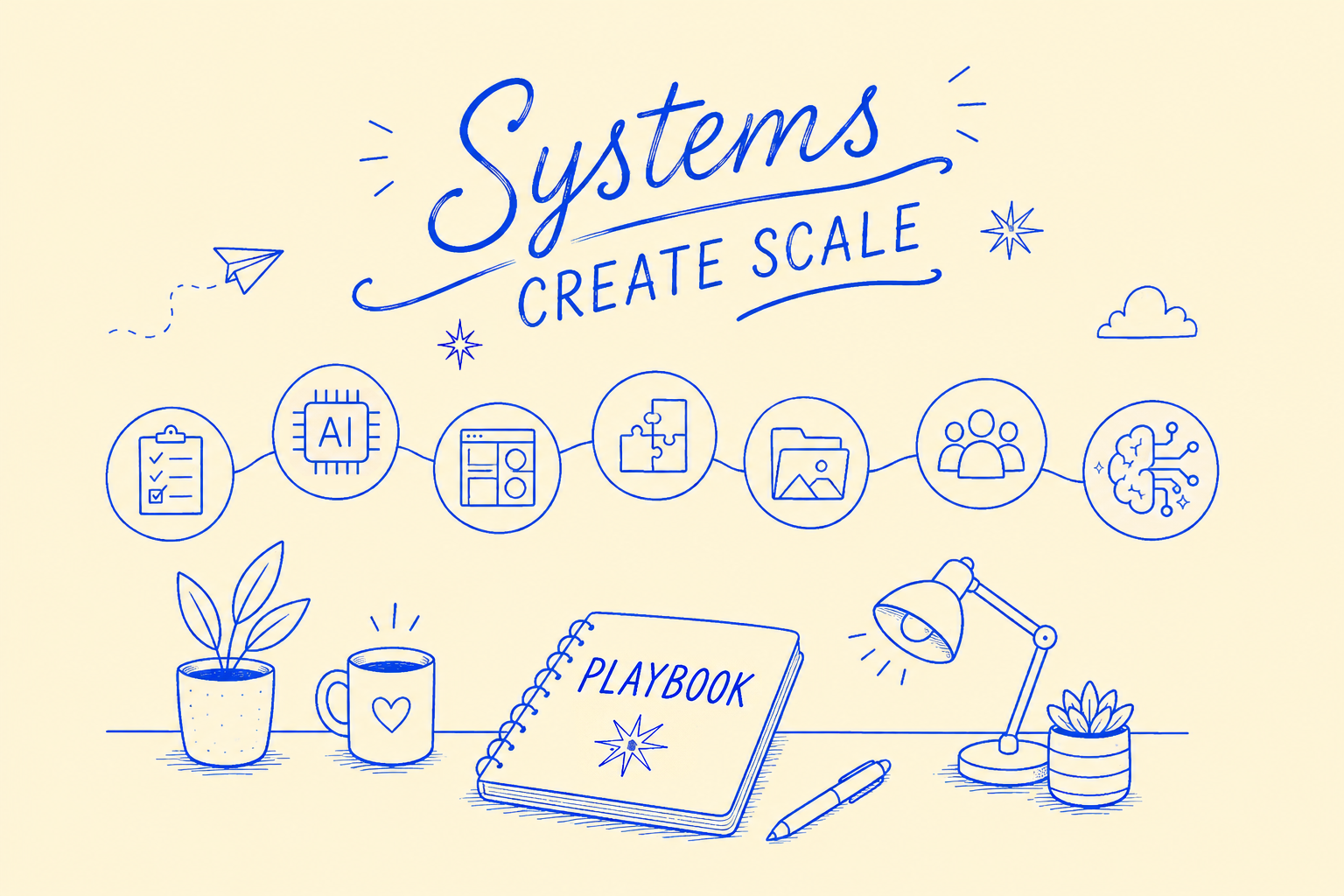
The biggest challenge facing creative teams isn't talent—it's complexity. As organizations grow, projects take longer, work gets duplicated, and teams find themselves making the same decisions over and over again. What starts as a few small inefficiencies eventually becomes friction that slows everything down.
The most successful organizations overcome this by building systems. Instead of reinventing the wheel, they create repeatable processes, reusable assets, and clear frameworks that help teams move faster and stay aligned. Their advantage isn't that they work harder—it's that they've made it easier to do great work consistently.
The organizations that scale best are the ones that reduce friction, simplify decision-making, and create smarter ways of working. If you want to increase creative output without increasing complexity, these are the seven systems worth building first.
An Intake System
Most creative teams don't struggle with creating great work—they struggle with how work enters the system. Work arrives through chats, emails, meetings, hallway conversations, and executive drive-bys, often with inconsistent context, shifting priorities, and unclear objectives. Before teams can begin creating, they spend valuable time figuring out what they're actually being asked to do, leading to unnecessary revisions, missed expectations, and wasted effort. A strong intake system solves this by creating consistency before work begins: every project enters through the same briefing process, every stakeholder answers the same questions, and every request is evaluated against the same criteria.
A strong project kick off should include:
Standardized intake forms (briefs)
Business objectives
Audience definitions
Success metrics
Priority scoring
Stakeholder alignment
Approval requirements
The goal isn't adding bureaucracy. The goal is reducing ambiguity. The faster your team understands the assignment, the faster they can create value.
A Design System
As organizations grow, one of the biggest obstacles to scale is repeated decision-making about how the brand is expressed. The same questions surface across teams and projects: Is this on-brand? What's the right message? Which design pattern should we use? Left unchecked, these decisions create delays, inconsistency, and unnecessary work.
High-performing creative organizations solve this by documenting design and tone decisions once and turning them into reusable systems. Instead of relying on tribal knowledge or constant leadership involvement, they create clear frameworks that help teams make faster, more consistent decisions on their own.
Examples include:
Brand principles, voice and personality guidelines
Messaging and customer experience frameworks
Brand identity systems and design patterns (logo, colors, fonts, elements)
Templates, playbooks, and content standards
These systems provide structure without limiting creativity. By establishing shared standards, teams spend less time debating routine decisions, recreating existing work, or searching for answers.
The goal isn't documentation or standardization for its own sake. The goal is speed and clarity. Every decision that can be made once and reused across the organization reduces friction, improves consistency, and creates more time for the work that truly requires creative thinking.
A Modular Content System
This is where many creative teams leave their biggest scaling opportunity on the table. The most successful brands rarely start from scratch because they've already invested in building assets, frameworks, and systems they can reuse. Just as top email marketers rely on swipe files and proven frameworks, high-performing creative teams develop repeatable building blocks that can be adapted across campaigns, channels, and audiences. The goal isn't to eliminate creativity—it's to stop reinventing the same solutions every time a new project appears.
Examples of reusable creative systems include:
Campaign frameworks and kits
Content pillar cycles
Reusable content modules
Social media systems
Illustration and animation packages
Design component libraries
Creative templates
Over time, the question shifts from "How do we create this?" to "What can we build from what already exists?" The teams that scale fastest understand that originality and efficiency aren't opposites. They use systems to handle the repeatable work so they can focus their energy on the ideas, insights, and creative decisions that actually require human creativity.
An Asset Management System
Assets don’t create value if nobody can find them. Every creative leader has experienced the frustration of knowing a file exists somewhere but spending more time searching for it than actually using it. A landing page template is buried in someone's desktop folder. A product photo lives in three different locations. The "latest" logo turns out not to be the latest version at all. These moments feel small in isolation, but across an organization they create significant friction, slow down execution, and force teams to spend time recreating work that already exists. When people are searching, validating, or rebuilding assets, they're not spending their time actually creating.
An effective asset management system creates a single source of truth and makes the right resources easy to find, trust, and use. At a minimum, it should include:
Clear naming conventions
AI-powered metadata and tagging
Version control
Usage rights documentation
Searchable asset libraries
Universal asset previews
Governance standards
The easiest way to increase creative output isn't always working faster. Sometimes it's simply making it easier for people to find, access, and reuse what already exists.
A Talent & Resource System
Most creative leaders assume talent is the limiting factor in growth. In reality, the problem is often visibility and allocation. Teams hire more people because work feels overwhelming, but they rarely have a clear understanding of where capacity exists, which skills are available, or how resources are being deployed across the organization. As a result, some people become overloaded while others remain underutilized, priorities compete for attention, and scaling becomes increasingly difficult.
The organizations that scale most effectively treat people and resourcing as a system rather than a staffing exercise. They create repeatable ways to understand capacity, allocate work, develop talent, and adapt to changing business needs. Instead of relying on intuition or heroic effort, they build operational visibility into how creative resources are being used and where future capability is needed.
Just as importantly, they develop talent that thinks systematically. The most valuable team members don't simply optimize their own work—they look for ways to simplify work for everyone around them. They document what works, create reusable frameworks, share knowledge, and continuously reduce complexity. As organizations grow, the ability to build and improve systems becomes just as important as individual creative skill.
A strong talent and resource system should include:
Capacity planning
Resource forecasting
Skills inventories
Workload visibility
Career development pathways
Knowledge transfer processes
The objective isn't simply hiring more people. It's ensuring the right work reaches the right people at the right time while creating an environment where knowledge, processes, and best practices can scale. When talent is supported by strong systems, creative output becomes more predictable, scalable, and sustainable.
An AI-Augmented Production System
Most conversations about AI focus on the tools themselves, but tools rarely create a lasting competitive advantage. The real opportunity lies in how those tools are integrated into the way work gets done. Today, every creative team has access to technology that can accelerate research, content creation, asset management, and production tasks. Yet many organizations still use AI in isolated experiments rather than embedding it into repeatable workflows. As a result, the impact remains incremental instead of transformational.
The teams creating the greatest advantage aren't simply adopting AI—they're building it directly into their operating model. Examples include:
Creative brief generation
Research synthesis
Asset tagging
Content adaptation
Metadata creation
Knowledge management
Prompt libraries
Workflow automation
The technology itself isn't the advantage. The system surrounding the technology is. Anyone can access the same AI tools, but not every organization creates the processes, standards, and workflows that allow those tools to scale across an entire creative team.
Bottom Line: Keep It Simple to Scale
The organizations that scale most effectively are not necessarily the ones working harder. They're the ones that have built systems that reduce friction, eliminate repetitive work, and make better decisions faster.
Without systems, teams spend their time searching for information, recreating assets, and solving the same problems repeatedly. With systems, they can focus their energy on strategy, innovation, and creative thinking. The goal isn't to replace creativity with process. It's to create more space for creativity by systemizing the work that doesn't require it.
One principle I often remind myself and my teams of is K.I.S.S. — Keep It Simple to Scale. The simpler the process, the easier it is to adopt, repeat, improve, and grow. And for the avoidance of doubt, this is not a management directive requiring employees to physically kiss one another. It's a reminder that complexity rarely scales, but simplicity often does. Great teams don't just work harder—they make it easier for everyone to do great work.
